
Senay Ozdemir, founder & CEO of the Women in Wine Expo, at TEDxAmsterdamWomen giving insights into the world of female winemakers.
Interview with Florence Tilkens Zotiades
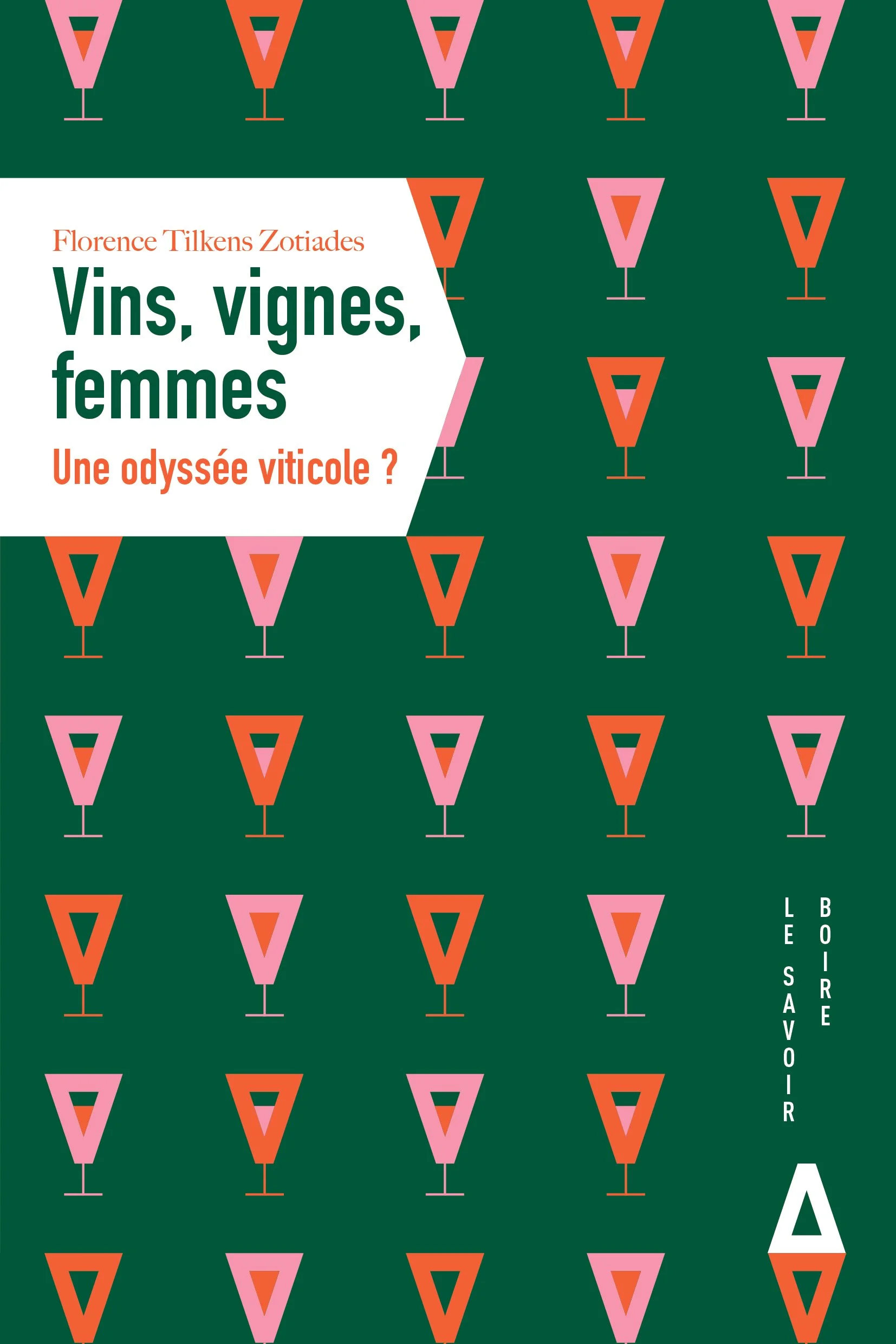
Women have shaped wine for centuries — yet their stories are too often invisible. At WIWE, Florence Tilkens Zotiades, author of Vins, vignes, femmes – Une odyssée viticole?, sits down with our founder and journalist Senay Özdemir, who explored women in wine in her TEDxAmsterdam talk, to uncover the hidden history of female winemakers, estate managers, and innovators — and to ask how telling these stories can change the industry today.
Florence, what drew you to explore women’s roles in wine history?
I’ve always been fascinated by women who challenged social limits, and by wine as a cultural and economic force. Studying wine through this lens revealed a striking gap: women were everywhere in production, consumption, and knowledge — yet largely absent from narratives of authority and history. That absence became the starting point of my research.
When did you realise women weren’t just underrepresented, but systematically erased?
Looking at nineteenth-century French literature, women were almost never shown as independent wine actors. They appeared symbolically — as moral examples or social warnings — and when they drank or managed wine, it was framed as deviant or mediated by male authority. This pattern repeated across centuries, showing that exclusion was structural, not accidental.
Can you give examples of periods or stories where women were influential but later forgotten?
Women likely contributed to early viticulture and fermentation during hunter-gatherer and early agricultural times. In medieval Europe, nuns and abbesses managed vineyards and preserved technical knowledge. In early modern Europe, widows sometimes ran estates successfully, thanks to temporary legal autonomy. Yet as wine gained institutional, economic, and symbolic power, women’s roles were often minimized or erased from records.
How did legal frameworks and social norms shape recognition in wine?
Inheritance laws, marriage, and property rights largely favoured men. Women’s labour, knowledge, and estate management often went uncredited, except when widowhood temporarily granted autonomy. Even language reinforced exclusion: wine expertise was described in masculine terms, while women were relationally or symbolically framed. Together, these cultural, legal, and economic structures ensured their invisibility.
Why does wine history focus so heavily on “great men” and dynasties?
As estates became markers of lineage, property, and prestige, histories naturally highlighted male ownership and succession. Dynastic storytelling aligned with legal and archival records, reinforcing the idea that greatness in wine was male. In the process, the collective and domestic contributions — largely female — disappeared.
If women’s stories had been preserved, how might wine history look today?
It would be more relational and collective, centred on transmission, care, and experimentation, rather than solely ownership or conquest. Expertise would be broader, valuing domestic and informal knowledge alongside institutional authority, and our understanding of wine today would be richer and more inclusive.
How do historical patterns of exclusion show up in today’s wine industry?
Women remain underrepresented among estate owners, head winemakers, critics, and institutional leaders, though present at every level of production. Access to capital and leadership in prestigious estates is still skewed. Wine language and symbols continue to favour masculine-coded authority, showing how historical erasure persists in modern forms.
What has changed for women in wine — and what hasn’t?
Access to education, technical training, and international experience has improved dramatically. Networks of mentoring and solidarity now support women across generations. What hasn’t changed as much is long-term ownership, symbolic authority, and public recognition. Women’s successes are more visible but still framed as exceptional rather than part of a continuum.
Were there moments in your research that surprised or moved you?
I was struck by the consistency of exclusion across centuries — women were always present and essential, yet repeatedly absorbed into male narratives. The Champagne widows were especially moving: their leadership emerged through loss, revealing both women’s capabilities and the systemic injustices that had constrained them. After learning their stories, I can’t look at a bottle of Champagne the same way.
How has this research changed the way you experience wine today?
I focus on small producers with meaningful stories, particularly female winemakers. Wine feels more authentic, grounded in craft and place. I also explore Greek wine through a podcast pairing female and male voices, creating a more balanced dialogue about expertise and experience.
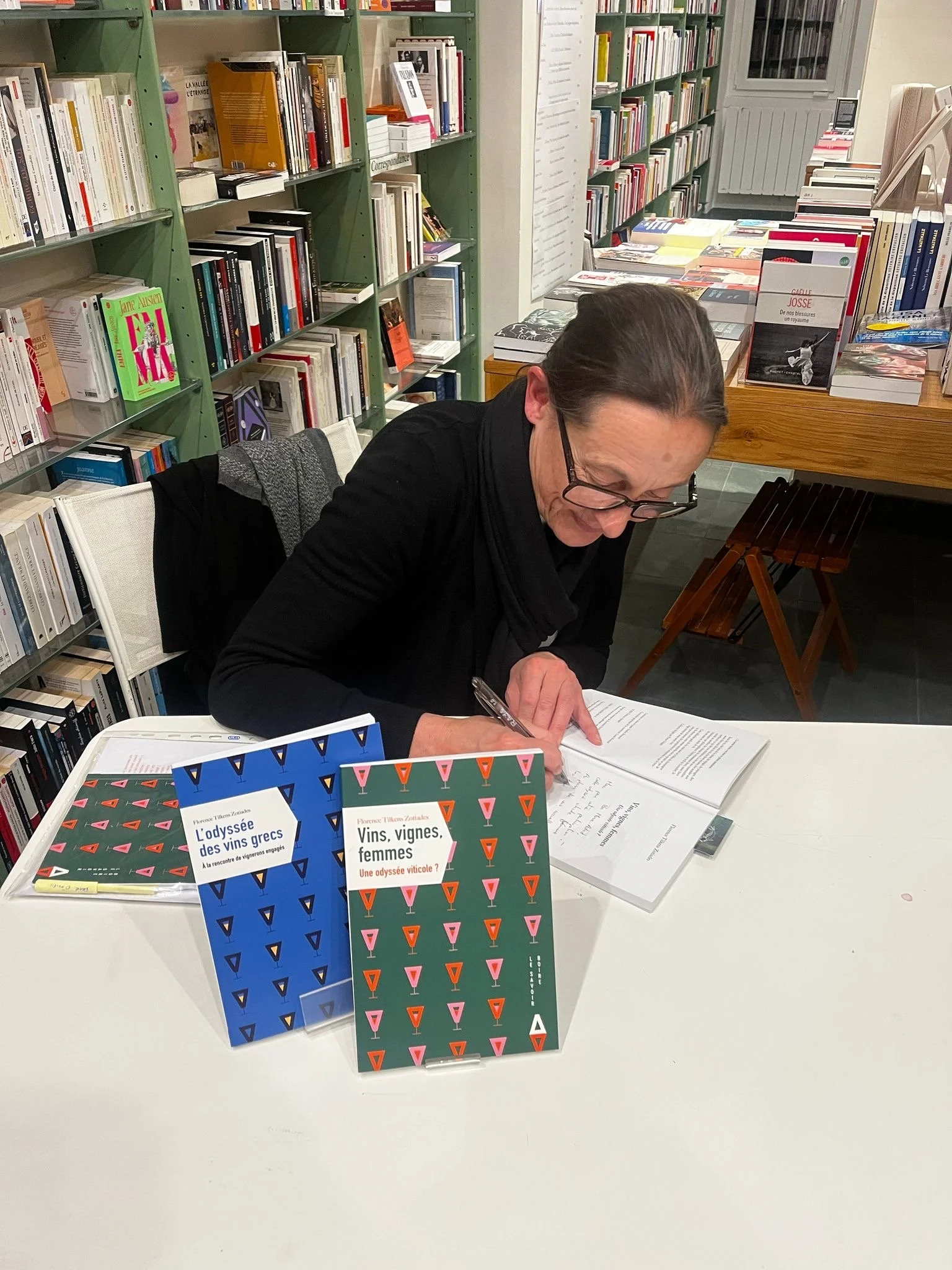
Florence signing her book at the Librairie des Femmes in Paris.
How can women’s place in wine history be reclaimed?
By searching archives, contracts, letters, and overlooked sources to identify women’s contributions. Questioning established narratives and making these stories public restores accuracy. This is not mythologizing, but acknowledging real contributions that have long been ignored. Reclaiming women’s place is about ensuring their expertise is recognized, their decision-making respected, and their influence visible — not only for history, but for the present and future of the industry.
What role do education, journalism, and events like WIWE play in this process?
They are absolutely central. Education helps future professionals understand that expertise and legitimacy are not inherently male, integrating women’s contributions into curricula and training. Journalism brings these stories to the public, challenging myths and highlighting overlooked figures. And events like Women in Wine Expo make the change tangible: they provide a platform for women to be seen, to network, and to share knowledge. You see, WIWE transforms research into lived experience, connecting historical insight with professional practice and demonstrating how an inclusive wine culture can thrive. It’s not just about visibility; it’s about reshaping the structures that determine authority and recognition in the industry.
What do you hope readers take away from your book?
I hope it encourages readers to question assumptions about authority, value, and expertise in wine. More than memorizing names, the book invites recognition of women as legitimate actors across history and today, and inspires reflection on how narratives shape the way we understand craft, innovation, and leadership.
Finally, if you could raise a glass to one forgotten woman from wine history, who would it be?
I would toast all the women who worked invisibly in vineyards and cellars, sustaining estates and harvests without recognition. Honouring them restores dignity to their labour and reminds us that wine history was built collectively — by countless women whose contributions were never recorded or celebrated.
Florence Tilkens Zotiades studied at Sorbonne University and began her career in international development before entering the wine sector. An author, lecturer, and amateur historian, she explores wine through cultural, economic, and symbolic perspectives. She advocates for professional equality and women’s economic independence, and previously served as president of the French association Led By Her, supporting women entrepreneurs. Her work invites the industry to reconsider the narratives shaping wine today.

the women in wine expo
The Women in Wine Expo (WIWE) is a global traveling platform connecting women in wine across regions, disciplines, and cultures. WIWE brings together wine professionals from around the world — from producers and entrepreneurs to buyers, educators, and industry leaders — creating a space where knowledge, experience, and opportunity are shared in an open and international context. At its core, WIWE is built on connection: between women in wine, between emerging wine regions, and between local producers and the global industry.
A SHARED PLATFORM FOR GROWTH
In an industry where women remain underrepresented in leadership and entrepreneurship, WIWE creates a platform that supports both professional development and collective exploration. Each WIWE edition is a 3-day international gathering hosted in a different wine region, bringing together:
female wine professionals from across the world
local producers and regional voices
international buyers, distributors, and industry experts
Together, they explore the present and future of wine — through dialogue, tasting, shared learning, and real-world connection.
BEYOND A CONFERENCE
WIWE is not only a conference, and not only a network.
It is a shared experience.
A space where professional exchange and human connection come together — where women in wine travel, learn, and grow alongside each other, while engaging directly with the regions that are shaping the future of the industry.
Each edition combines:
knowledge sharing and education
exploration of emerging wine regions
professional networking and business exchange
and the building of long-term international relationships
A GLOBAL JOURNEY
Each year, WIWE takes place in a different wine region — creating a growing global narrative of how wine is evolving across cultures and continents. From established traditions to emerging landscapes, WIWE highlights the diversity of the wine world while making its connections more visible, accessible, and human.
OPEN TO ALL
WIWE welcomes everyone with a passion for wine and hospitality — from established professionals to those entering the industry. We invite you to explore our platform, follow our journey, and become part of a growing international community shaping the future of wine together.
Follow WIWE for updates, stories, and insights from the world of women in wine.