WOMEN’S VOICES
One of the main goals of the Women in Wine Expo (WIWE) is to highlight the work of women in wine, whose voices—from East to West, North to South—have too often been left out of wine history. By sharing these stories and making these women visible, WIWE—and this series of interviews—aims to change that.
Over the past months, our founder, Senay Özdemir, has been speaking with women across the wine industry—winemakers, cellar masters, and industry leaders—to hear their experiences, perspectives, and passions. Each conversation reveals a different side of the craft, and together they paint a richer picture of how women are shaping the future of wine.
Anna Zenz, Winę Queen of Germany
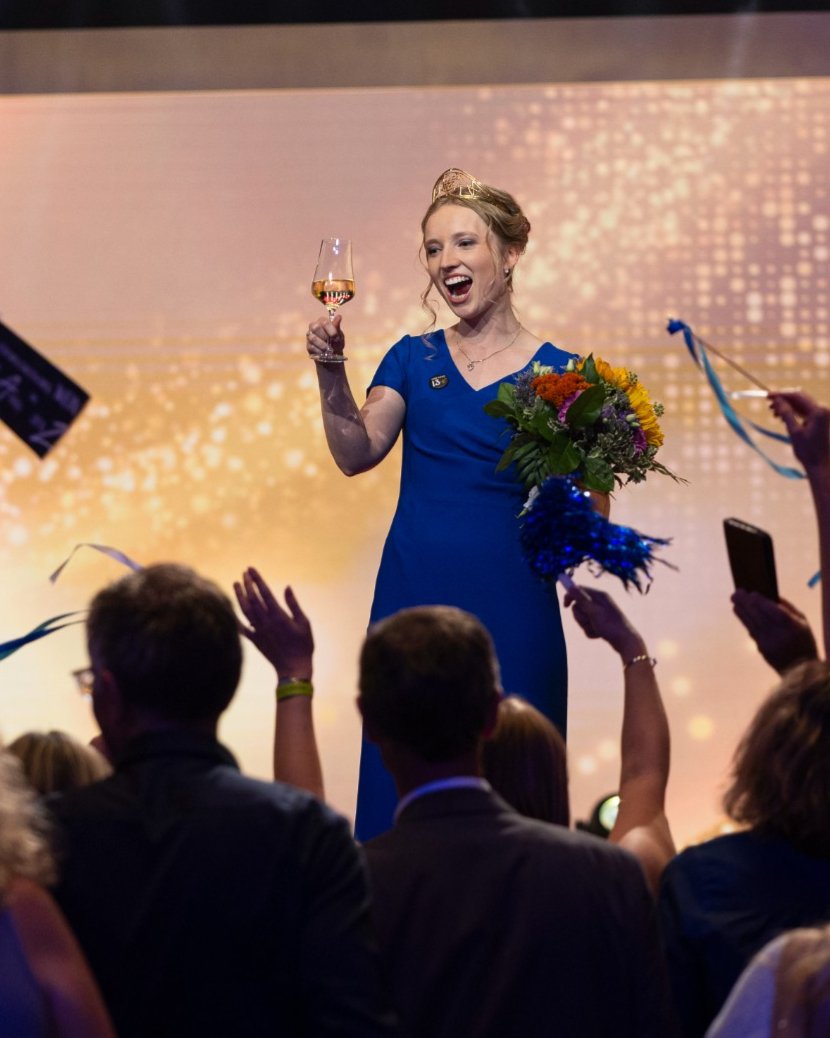
Anna Zenz, Wine Queen of Germany.
Anna Zenz, the current Wine Queen of Deutsche Weine, combines deep expertise, regional pride, and passion for innovation. She shares her journey, insights into German wine, and advice for young women in the industry.
Can you tell us a bit about your journey to becoming the Wine Queen of Deutsche Weine?
“My journey was driven by curiosity, dedication, and a strong connection to my wine region. Growing up in my parents’ winery, which also includes a restaurant and holiday apartments, gave me a deep appreciation for the work and culture behind German wine. People’s local involvement in wine events grew into a strong desire to represent German wine nationally and internationally. The election process was tough, but really rewarding. It made me better at the technical side of things and at talking to people.”
What does being the Wine Queen involve on a day-to-day basis?
“No two days are the same. My role includes wine tastings, trade fairs, media interviews, travel, and educational events. I act as a bridge between winemakers, professionals, and consumers, always with the goal of communicating German wine authentically and enthusiastically.”
How did your early experiences in wine education or your local wine region prepare you for this role?
“Growing up in a wine region meant that wine was always part of everyday life. Formal wine education, tastings, and hands-on vineyard experience gave me a solid foundation and helped me understand wine not just as a product, but as culture, craftsmanship, and community.”
How do you balance representing tradition and heritage with modern trends in the wine industry?
“German wine is rooted in centuries of tradition, but it is also highly innovative. I try to honor heritage while highlighting modern approaches such as sustainable viticulture, new styles, and a younger generation of winemakers who are redefining German wine.”
What is the most rewarding part of being a public ambassador for German wines?
“The most rewarding part is seeing people change their perception of German wine. When someone discovers a new grape variety or style and becomes genuinely excited, that moment makes all the effort worthwhile.”
German wines are often defined by their terroir and cool climate – how do you explain this to newcomers?
“I explain that our cool climate allows grapes to ripen slowly, which preserves freshness and aromatic complexity. Combined with diverse soils and steep vineyards, this creates wines that are elegant, precise, and expressive of their origin.”
Are there particular grape varieties or regions you are most passionate about showcasing?
“Riesling will always be close to my heart because of its versatility and perfect ability to reflect terroir. At the same time, I enjoy showcasing Spätburgunder, Silvaner, and lesser-known regions that surprise people with their quality and character.”
What makes German wine culture unique on the global stage?
“German wine culture combines craftsmanship, precision, and openness. It values both tradition and experimentation, and it is deeply connected to landscape, food, and social life rather than prestige alone.”
What does it mean to you to hold a leadership role as a young woman in wine?
“It is both an honor and a responsibility. I want to show that expertise, confidence, and passion matter more than stereotypes, and that young women can be strong, knowledgeable leaders in the wine world.”
How do you see opportunities for women in the German wine industry evolving?
“Opportunities for women in the German wine industry are clearly growing. The average proportion of female trainees in winemaking in Germany has been 30 percent over the last five years. Between 2015 and 2019, it was only 24 percent. Networks such as Vinissima, which supports and connects women across all areas of the wine sector, play a crucial role in this development. They provide visibility, education, and mentorship, helping women to step into leadership positions with confidence. Overall, the industry is becoming more diverse, more open, and more forward-thinking.”
Do you have any advice for young women who want to pursue a career in wine?
“Be curious, ask questions, and don’t be afraid to take space. Build your knowledge, trust your palate, and find mentors who support you. The wine world needs diverse voices.”
What trends in German wine are you most excited about right now?
“One of the most exciting trends is the renewed focus on Lagentypizität, the clear expression of individual vineyard sites. Winemakers are increasingly highlighting specific parcels and origins, allowing soils, microclimates, and vineyard character to speak more clearly in the glass. At the same time, there is growing interest in wines with lower alcohol, which fit perfectly with Germany’s cool-climate strengths. These wines offer freshness and elegance, without missing complexity, and respond well to changing consumer preferences for lighter, more drinkable styles.”
How is climate change affecting vineyards in Germany, and how are winemakers responding?
“Climate change presents significant challenges, including increased pressure on water management and irrigation, a higher risk of late spring frosts, and the emergence of new diseases and pests. Winemakers are responding by adapting vineyard practices and by working with new grape varieties — both PIWIs and other heat- and drought-tolerant varieties — to increase resilience and ensure sustainable wine production in the future.”
Are there innovative approaches or initiatives in the industry that you think are particularly inspiring?
“Yes, especially collaborations between young winemakers such as Generation Riesling, research projects on sustainability, and new communication formats that make wine more accessible to younger audiences.”
Do you have a favorite wine or style that you personally enjoy?
“I personally enjoy wines that are precise, elegant, and expressive rather than overpowering. Due to my personal sensory preference, my roots in the Mosel region, and Germany’s cool climate, I am also a great fan of Riesling Kabinett. These wines are light, finely fruity, and refreshing, with lower alcohol levels and vibrant acidity. They perfectly represent the balance, finesse, and drinkability that make German wines so distinctive and enjoyable.”
What’s a common misconception people have about German wines?
“Many people still think all German wines are sweet. In reality, 50 percent of all German wines are dry and one fourth is off-dry! Germany produces outstanding dry wines in many styles, from sparkling to powerful reds.”
If you could host a wine tasting with any three historical or modern wine figures, who would they be – and why?
“I would choose Romana Echensperger, Master of Wine, Hans-Günter Schwarz from the Pfalz, and Dr. Randolf Kauer, former professor at Hochschule Geisenheim University. Romana Echensperger stands for outstanding wine expertise and communication on an international level. Hans-Günter Schwarz, who sadly passed away in 2025, was a true pioneer of German wine, known for his clear philosophy, minimal intervention, and strong focus on quality and vineyard work. Dr. Kauer represents the scientific and educational side of wine. Together, these three personalities would create a fascinating exchange between practice, science, and global perspective.”
Do you have contact with other Wine Queens in Europe?
“The tradition of the wine queen is mainly cultivated in Germany and Austria. I personally know only a few wine ambassadors from other European countries. Within Germany, there is a regular and lively exchange among the wine queens and wine ambassadors, and we maintain a very good relationship based on strong cooperation and mutual support.”
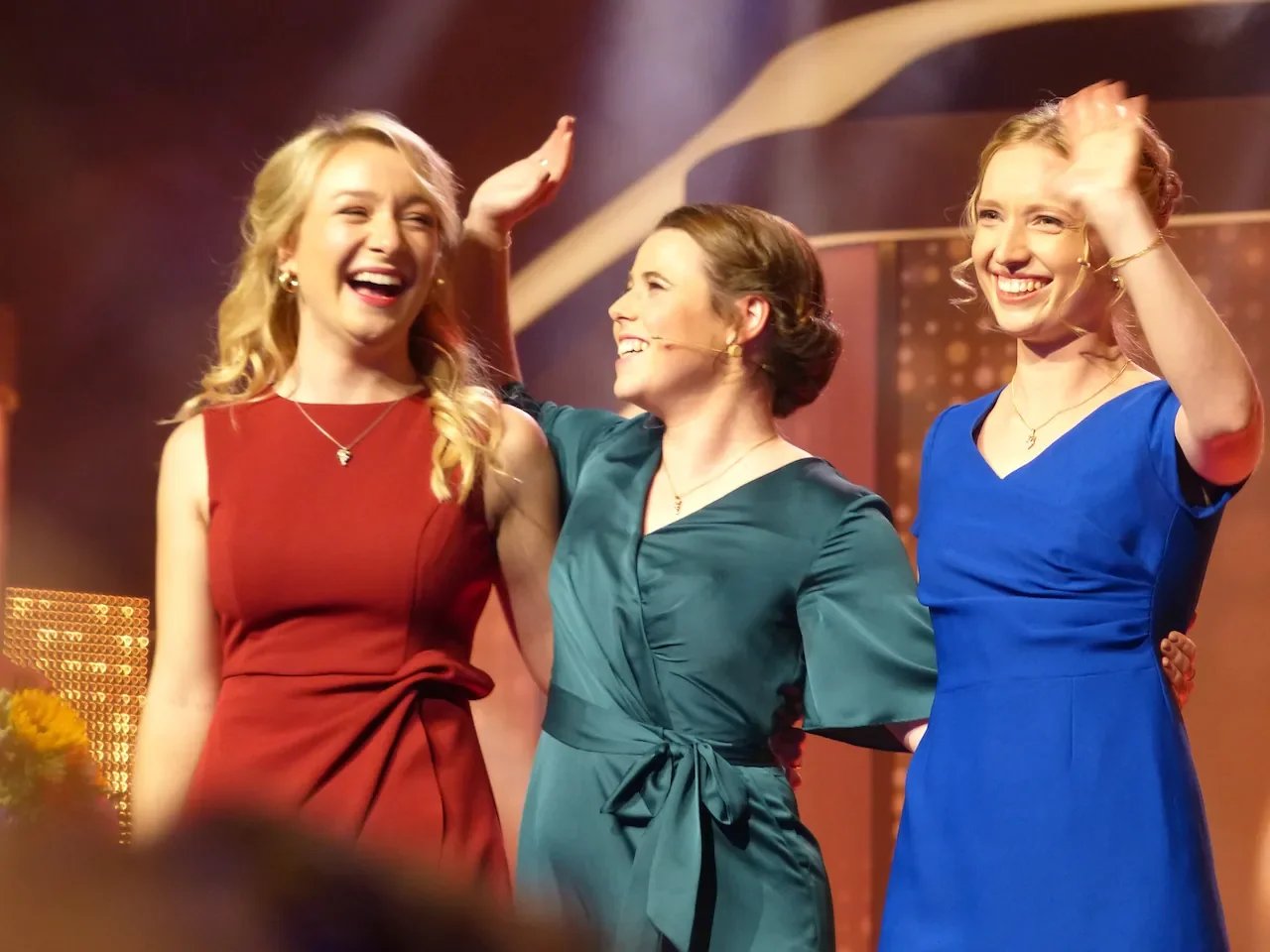
Wine Princesses Emma Meinhardt and Katja Simon and the new German Wine Queen Anna Zenz celebrate / © FrontRowSociety.net, Photo: Carola Faber
Nicole Wolbers: Redefining the World of Sparkling Wine
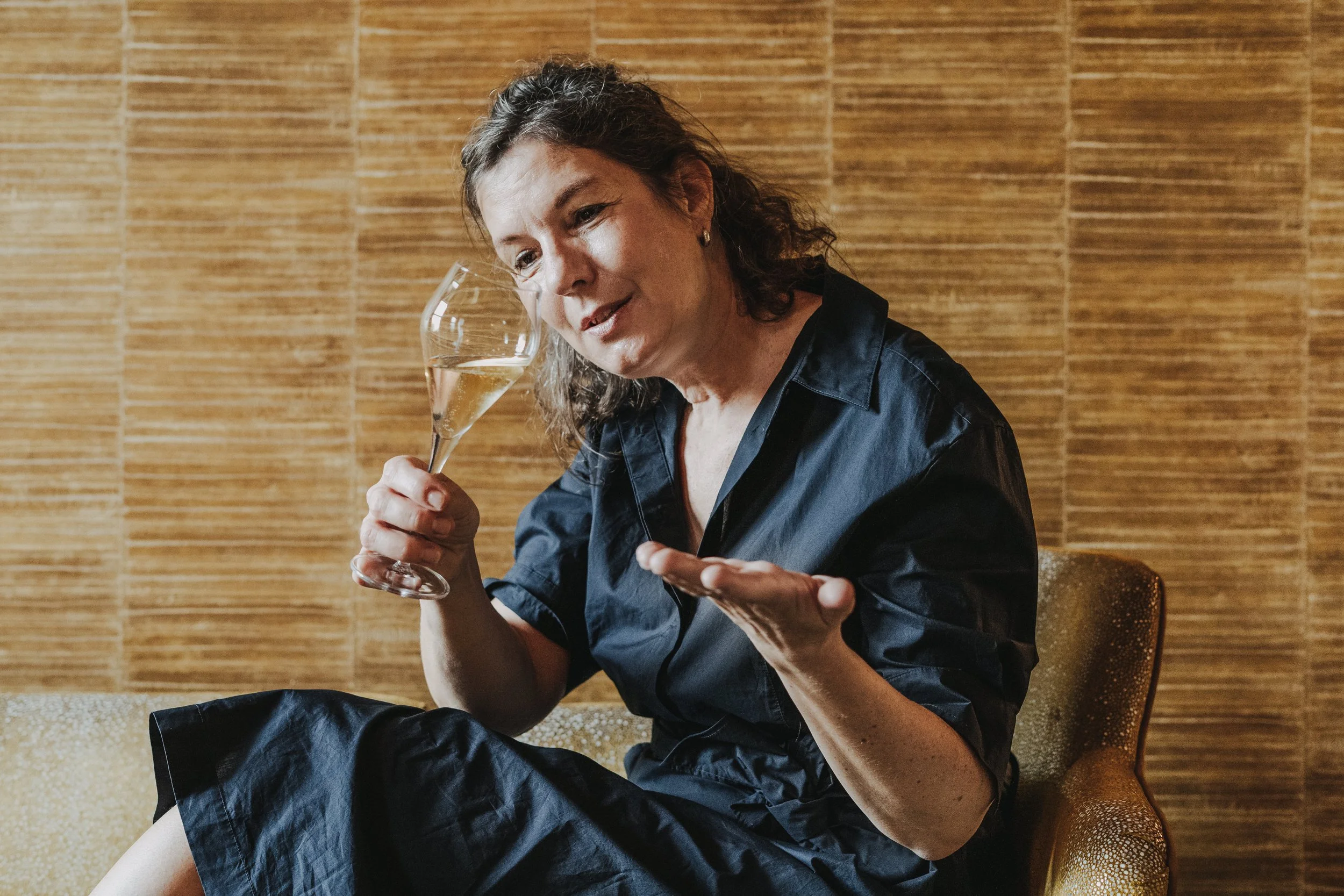
Nicole Wolbers embodies the ethos of WIWE: elevating women’s voices, sharing expertise, and connecting people to the cultural story behind every bottle. Through her work, the sparkling world of German wine—and beyond—becomes more visible, inclusive, and inspiring. Nicole Wolbers is the founder of Schaumweinmagazin and a sparkling wine specialist whose expertise spans traditional-method Sekt, Champagne, Crémant, Cava, and beyond. Based near Berlin, Nicole is a judge at international wine competitions, an educator, and a journalist. Through tastings, training, and her platform, she connects producers, the trade, and consumers to the world of high-quality sparkling wines.
At ProWein, she will also be conducting the Vinissima Cava Tasting on Sunday, 15th of March, inviting visitors to explore the precision, character, and cultural story behind this Spanish sparkling wine.
“My path into wine wasn’t a straight line, but rather a journey of following my developing passion: the craft of bubbles,” Nicole explains. Growing up in the Saar region near the Mosel and the French border, wine was part of everyday life, meals, and celebrations. A first career as a textile engineer and product manager gave way to a move to Santa Barbara, California, where Nicole’s passion turned professional. Working in a local wine shop, studying in Napa, and completing the WSET Diploma in London laid the foundation for her career in the international wine world.
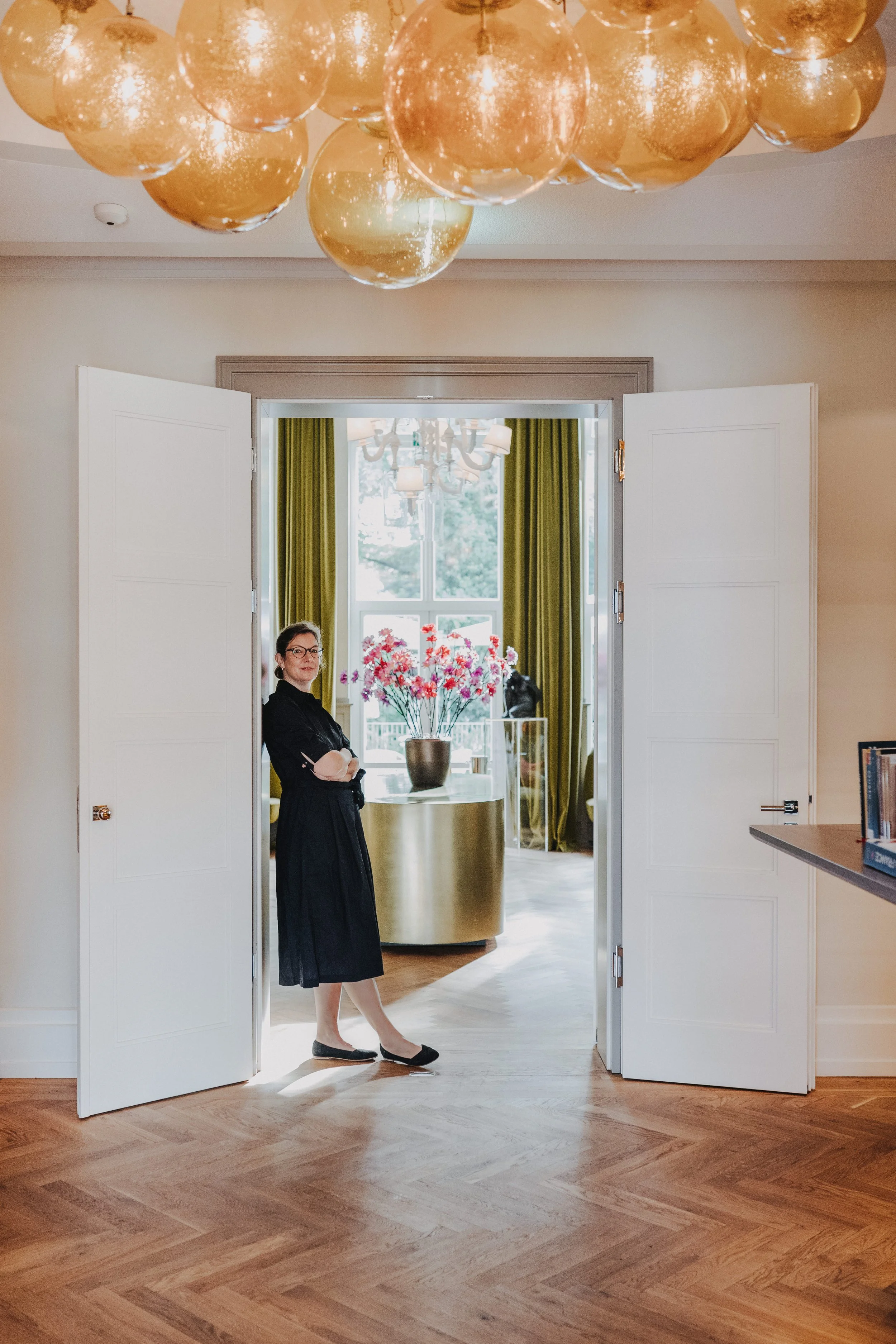
“A move to the UK and exposure to a dynamic, sparkling-wine-driven scene ignited a lasting fascination for traditional-method bubbles,” she says. Judging at competitions and researching Champagne for her Diploma thesis sharpened her focus on sparkling wines. Noticing a gap in Germany for specialized Sekt knowledge, Nicole created Schaumweinmagazin—a platform dedicated to technical excellence and the stories behind sparkling wine.
Nicole is clear about both the challenges and advantages of being a woman in a still male-dominated industry:
“Entering the wine world as a career changer and a woman often meant having to prove my expertise twice: first, against the idea that sparkling wine is 'just bubbles,' and second, against traditional gender expectations. My background as an engineer and a Diploma holder has been crucial; in technical discussions and on judging panels, my assertiveness, preparation, and consistency in quality have been key.”
At the same time, Nicole sees unique opportunities:
“Being a woman has allowed me to approach wine through a lens of community and communication. We often excel at storytelling, connecting people and culture. Throughout history, many prominent women have shaped the industry—especially in Champagne—and they continue to do so today. This perspective has been my greatest advantage in building a loyal audience for Schaumweinmagazin.”
Her work has also opened doors to collaborative spaces, including women’s wine associations, and to audiences eager for inclusive, diverse voices.
Nicole’s journey has been shaped by mentors, international experience, and hands-on engagement with producers:
“On-the-job training in Santa Barbara taught me the power of communication at the table. I was encouraged by the female director to start from scratch as a 'wine newbie.' Later, the academic rigor of the WSET Diploma and recognition from the Champagne Bureau UK cemented my knowledge and confidence. Exposure to innovative Sekt producers in Germany and abroad, and judging experiences internationally, encouraged me to think beyond the traditional German wine business.”
She also envisions a growing role for women in German wine:
“I see the role of women evolving from being ‘the face of the winery’ to becoming ‘the mind of the operation.’ More women will shape estates, lead cellar work, educate, and take part in international projects. Organizations like Vinissima, the VDP, the Sommelier-Union Deutschland, and the DWI are being transformed by female professionals, while the next generation of women Sektmacher is taking the stage with sparkle.”
As a regional speaker for the Vinissima Chapter Berlin-Brandenburg, Nicole mentors and connects women in wine, providing an empowering platform to learn, collaborate, and share experiences. “A thesis on Champagne bubbles, written as a late-career student in London, led to a nomination by the Champagne Bureau UK—and, indirectly, to founding Schaumweinmagazin. What began as curiosity about 'how bubbles work' evolved into a mission: to connect producers, the trade, and consumers around sparkling wines that are precise, characterful, and often under the radar.”
Hosting blind tastings, sharing stories behind the wines, and seeing others feel empowered to trust their own palate remain central to her work.For women entering wine, Nicole emphasizes knowledge, networks, and personal vision:
“Curiosity, continuous learning, and thinking beyond traditional career paths—through education, events, media, and entrepreneurship—create room for individual profiles and independence. Actively seek visible roles, say ‘yes’ to panels, and support other women publicly. Specialization is your superpower. Find the niche that makes your heart beat faster—and own it. Don’t be afraid to be the expert in the room.”
Something Extra for the Audience
“Sparkling wine is often reserved for celebrations, but my mission is to show that the craftsmanship behind a bottle of Sekt or other bubbles deserves a seat at the table every day. Let’s stop waiting for an occasion and make the occasion.” At ProWein, this mission comes alive: visitors can join Nicole for the Vinissima Cava Tasting on Sunday, 15th of March, where she will guide participants through the elegance and cultural richness of Spanish sparkling wine.
More information about Nicole and her magazine here: https://schaumweinmagazin.de
Nicole has just been awarded second prize in the pink.wine rosé writing competition (organized by Elizabeth Gabay MW) in the category "Rosé Terroirs Around the World" for her piece, Germany’s Pink Transformation: The Rise of Crafted Rosé from Pinot Noir.
tina pfaffmann:
“Every Vintage Is a Dialogue with Nature”
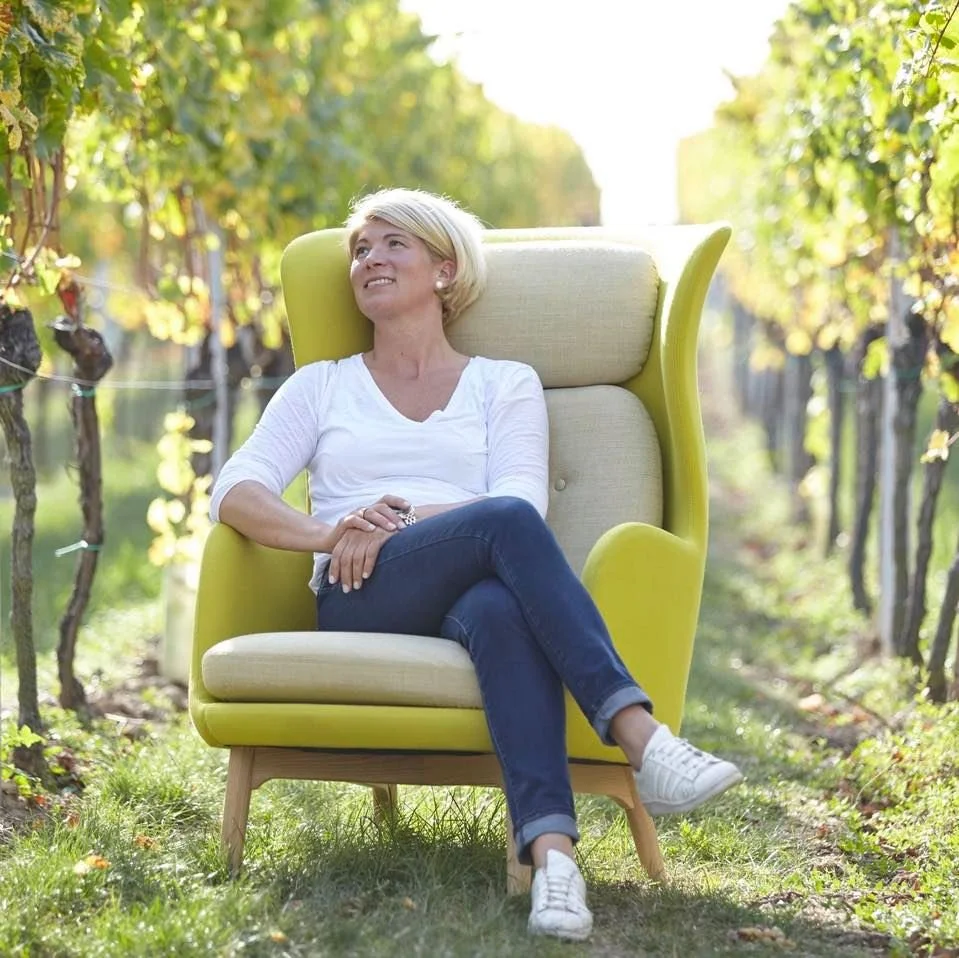
“I’m often asked how being a woman has influenced my work. I work emotionally and closely with my grapes, my vineyards, and my wines. Whether that’s because I’m a woman, I can’t say.”
Among these voices is Tina Pfaffmann, a German winemaker whose approach to viticulture is deeply personal and attuned to nature. Growing up on her parents’ vineyard, she learned early that winemaking is more than a profession—it is a way of life. Each vintage, she explains, is a dialogue with the land: a reflection of soil, climate, and season, shaped by patience, care, and personal attention.
How did you become a winemaker, and what inspired your path?
“I grew up on my parents’ vineyard, so wine was always part of my life. My father inspired me as a child, but as I grew older, it was nature itself that captured my imagination.
The idea that I can accompany a wine for an entire year—working in harmony with nature while adding my own touch—has always fascinated me. Today, my wines are my companions, my diary, and a new experience every year. With every vintage, my respect for the natural world grows deeper.”
How has being a woman influenced your work in the vineyard, the cellar, and the wider wine industry?
“I’m often asked how being a woman has influenced my work. I work emotionally and closely with my grapes, my vineyards, and my wines. Whether that’s because I’m a woman, I can’t say.
I’m ambitious and strong-willed, yet also deeply vulnerable at times. If these traits are seen as feminine, then they have shaped my approach to winemaking and allowed me to push my limits physically and creatively. Above all, I enjoy the process immensely.”
Have you faced challenges or prejudices as a woman in winemaking?
“Yes. At the time, I was too young to handle them well. Today, I would act differently. Still, those experiences—both highs and painful moments—were formative and helped me grow personally and professionally,” she says.
Who or what has most influenced your development as a winemaker?
“The people who took me seriously from the start and believed in my passion for vineyards and winemaking. My mentor, Hans Günter Schwarz, was particularly influential,” she notes.
What guidance would you give to women aspiring to technical or leadership roles in wine?
“Very simple: Follow your own path. Do what you enjoy.”
How do you see the role of women evolving in German viticulture?
“We should focus on developing German winemaking as a whole. Gender aside, we share the responsibility of ensuring that wine remains a cultural asset—something sustainable, enjoyable, and valuable. Protecting our soils, respecting natural rhythms, and producing authentic wines is a responsibility we all carry.”
Is there a wine or vintage that best reflects your journey?
“Each vintage is unique. Every year tells its own story—both professionally and personally. I aim to capture this narrative in my wines—they are truly my diary,” she explains.
Do you have a message for the ProWein and WIWE audience?
“My profession is my life. My joy comes from working with nature and translating its rhythms into wine. I hope my wines invite others to share in that journey—and to experience sustainability, authenticity, and terroir in every glass.”
Her words capture the spirit of WIWE: celebrating women, sharing their stories, and ensuring that their contributions are recognized. By making these voices visible, the wine world can finally start to tell a fuller, richer history—one that includes the women who have long shaped it.
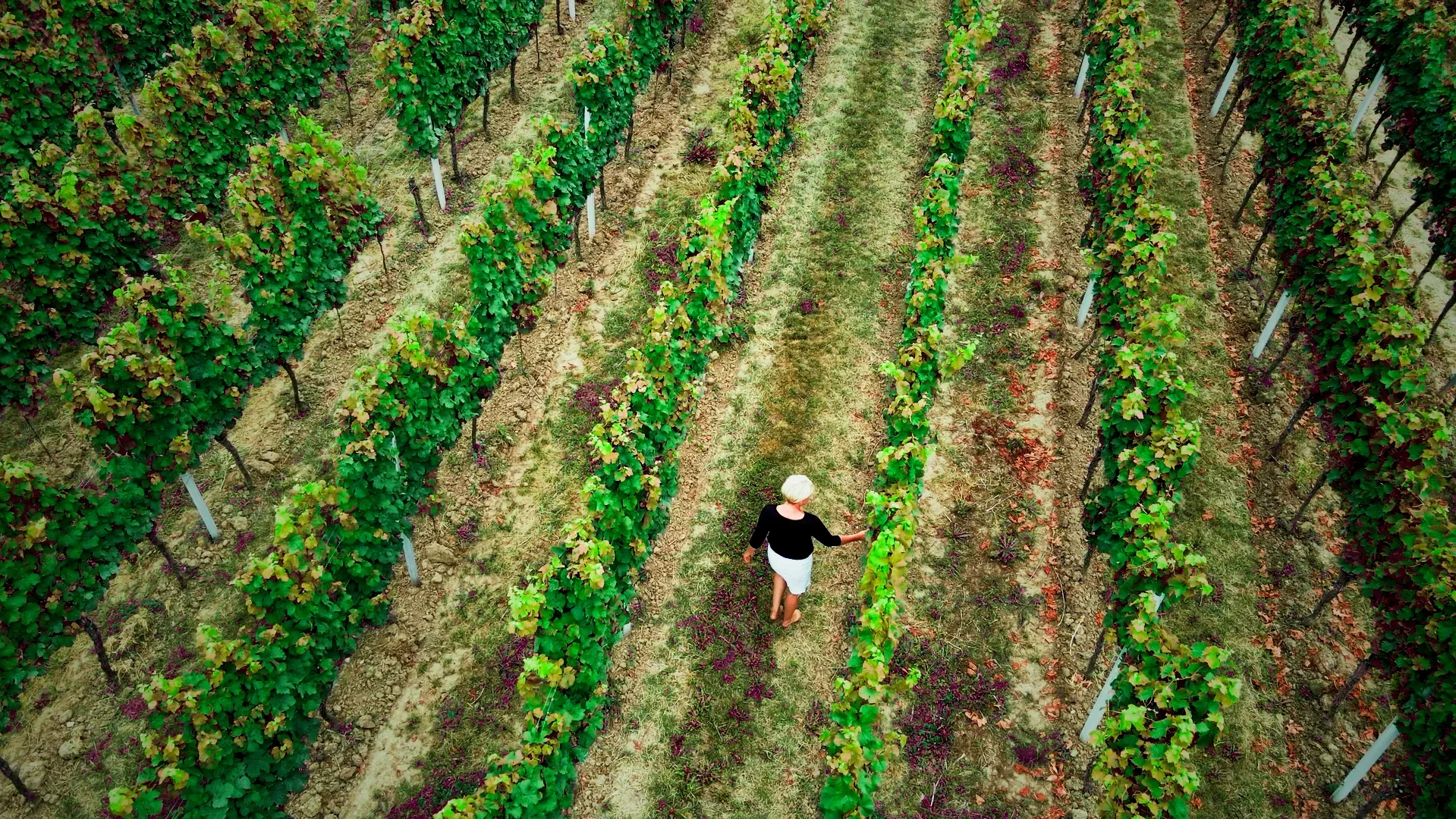
Tina walks through her vineyard in Frankweiler, in Germany’s Pfalz, where Riesling and Pinot Noir flourish.
Read the interview with Kerstin Houf here. More interviews with German women in wine are coming soon—stay tuned.