women shaping the future of cool-climate wines
Across the world’s emerging cool-climate wine regions, a new generation of winemakers is redefining what wine can be. In places where vineyards were once considered unlikely—from the Nordic countryside to the rolling hills of the United Kingdom and the lakeside vineyards of Canada—innovation, resilience, and a deep respect for nature are shaping a distinctive new wine culture.
In this interview series, we speak with four women winemakers who are helping to build these regions from the ground up. Each brings her own story, philosophy, and approach to the vineyard and cellar, yet they share a common spirit: curiosity, adaptability, and a willingness to work with the rhythms of challenging climates.
From pioneering grape varieties to rethinking traditional techniques, these winemakers are not only crafting compelling wines—they are helping to define the future identity of cool-climate viticulture.
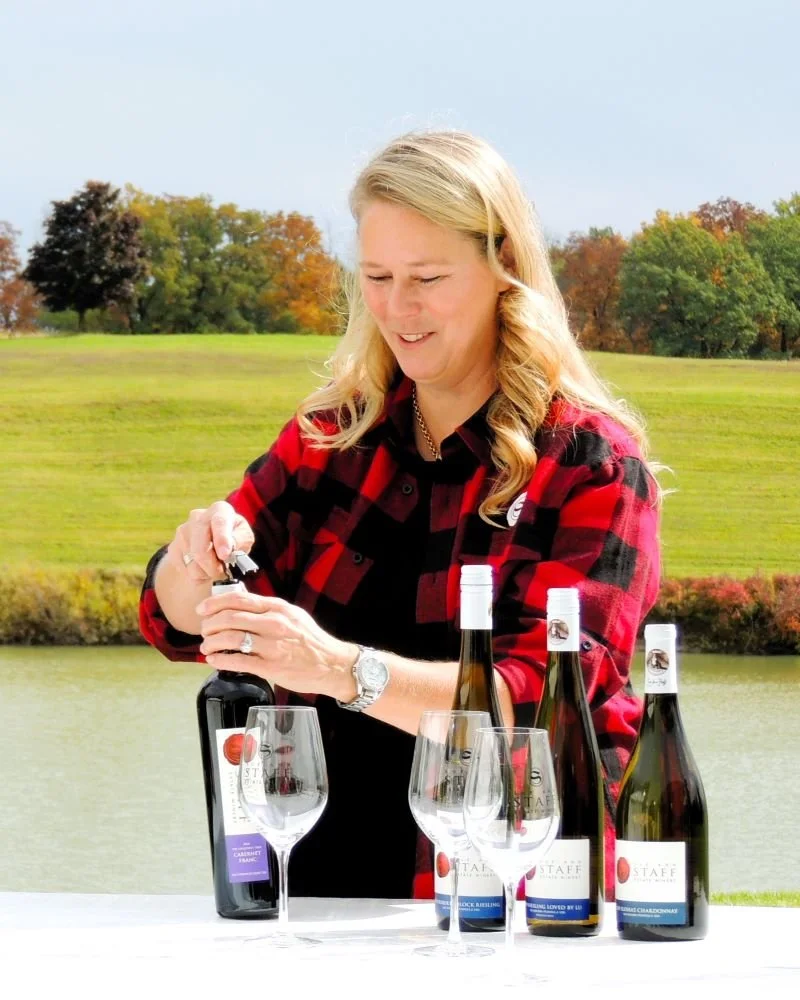
sue-ann staff
“Mother Nature always has the upper hand — but when everything aligns, Icewine becomes pure magic.”
turning frozen grapes into canada’s most iconic wine
In the cool-climate vineyards of the Niagara region, Sue-Ann Staff has built a career around one of the world’s most remarkable wines: Icewine. A fifth-generation grape grower, Sue-Ann combines deep family tradition with decades of winemaking experience to craft expressive wines that capture the intensity and purity of Canada’s winter harvests. Her vineyards, located along the Niagara Escarpment, benefit from limestone soils and a climate that allows grapes to freeze naturally on the vine — the defining condition for authentic Icewine. Known for her bold personality and unwavering belief in Canadian Icewine, Sue-Ann has become one of its most passionate ambassadors. Through her work in the vineyard and cellar, she continues to champion Icewine as one of the world’s great sweet wines — a rare expression of climate, patience, and nature’s timing.
SUE-ANN, Welcome to Prowein! Can you tell us about your journey into winemaking and what drew you specifically to Icewine production?
My journey into winemaking comes directly from my family’s history in grape growing. I am the fifth generation in my family to grow grapes. I learned the hands-on work in the vineyard from my grandmother, and the mechanical side from my father, who loved designing vineyard equipment. Our family was actually the first in Canada to use a mechanical harvester, along with many other innovations along the way. My attraction to Icewine came partly because I was one of the few Canadian-born — and female — winemakers when I started my career about 30 years ago. I was also a competitive figure skater, fast on the ski slopes, and even faster on a skidoo. It felt natural for me to embrace Icewine. When the temperature drops below –10°C, my whole body seems to come alive. I love the cold — and I love the attention that Icewine deserves.
Growing up and working in Canada, how did the climate and landscape influence your approach to vineyards and Icewine?
Our climate is ideal for Icewine. In summer, our heat levels are comparable to regions like Bordeaux, reaching around 32°C for extended periods. But in winter, temperatures drop far below freezing, which is essential for Icewine production. Legally, Icewine grapes must be harvested at temperatures below –8°C, but I prefer at least –10°C. At that point more water in the berry is frozen, so when the grapes are pressed the sugar concentration is higher, creating richer, more intense flavors. Of course, there is a limit. Below –14°C the grapes become too frozen and sugar levels can exceed 44 Brix, which yeast cannot ferment. Icewine requires a minimum of 32 Brix; 35 is typical, but I prefer around 38 Brix for my wines.
Why do you think many people know little about Icewine, and how would you like to change that?
Icewine has unfortunately lost some of its “shiny gold” status. As people become more health conscious and drink less alcohol, sweet wines have sometimes fallen out of favor. But I truly believe a great celebration should end with a glass of Icewine. It is one of the most extraordinary wines in the world: rich, intense, and full of flavor, yet often lower in alcohol than many other after-dinner drinks. It is also incredibly versatile. I even created a series called Frosty Fridays on YouTube where I showcase Icewine as an ingredient in cocktails.
Icewine requires very precise conditions. How do you manage the vineyard and timing to achieve the perfect harvest?
Producing Icewine requires extreme vigilance. We constantly monitor weather forecasts, wind, and cloud cover — sometimes we have to become our own meteorologists. The perfect harvest night is clear, with no clouds and no wind. When the sky is clear, the heat from the day escapes quickly into the atmosphere and temperatures drop rapidly. Everything must be ready in advance. Machinery struggles in those temperatures, especially hydraulic systems, so the harvester must be warmed up before we begin. Icewine harvesting is not for the faint of heart. It happens at night, in extreme cold, and timing is critical. Often we only get one opportunity to harvest. If the weather does not cooperate, the grapes may have to be used for a different style of dessert wine — which has only a fraction of Icewine’s value.
Which soils or vineyard sites give your Icewines their distinctive character?
Our vineyard benefits from the cool climate of the Niagara region. Summer warmth allows the grapes to reach full ripeness, while winter temperatures eventually drop low enough for Icewine harvest. Our soils consist of a thin clay layer over limestone from the Niagara Escarpment. Because we are more than three kilometers from Lake Ontario, the moderating effect of the lake is weaker here. That means temperatures drop faster and colder than in vineyards closer to the lake. Lake Ontario rarely freezes and acts as a huge heat source. Vineyards closer to the lake therefore experience fewer conditions suitable for Icewine production.
How has working with such extreme conditions shaped your philosophy as a winemaker?
The cold has taught me that we have very little control over our destiny as winemakers. Mother Nature always has the upper hand. She can be your best friend — or the toughest adversary. Our entire Icewine production depends on her delivering the right freezing temperatures. Without that, the wine must be declassified into a different dessert style, which has significant economic consequences.
How would you describe your winemaking style?
My style is very fruit-forward, always allowing the terroir and the climate to dictate the final wine. The Niagara region experiences tremendous variation between cooler and warmer vintages, which creates remarkable diversity in the wines from year to year.
Can you share a vintage that shaped your philosophy?
My very first Icewine vintage in 1997 defined the challenge of this style forever in my mind. That winter we had only five nights cold enough to harvest: New Year’s Eve, the night before New Year’s, January 14, February 14, and March 28. You can imagine the consequences when New Year’s Eve and Valentine’s Day both get destroyed by harvest nights in your first year as a winemaker. Let’s just say one fiancé didn’t survive that season!
Has being a woman shaped your experience in the wine industry?
For a long time I was somewhat oblivious to how being a woman may have affected my career. I was fortunate to have several people who strongly supported me — interestingly, many of them were older men. Only recently have I realized that my career may have inspired other women in our region to enter winemaking or viticulture. I wish I had mentored more of them earlier. When you are completely focused on your work, you sometimes miss what is happening around you. I call it the “ostrich effect.”
What advice would you give women entering the wine world?
Believe in yourself and develop a thick skin. Like the grape variety Vidal Blanc, you need resilience and energy. Say “yes” to opportunities — but also recognize when someone is taking advantage of you and be ready to say a firm and confident “no.”
How do you see the future of Icewine in Canada?
Icewine deserves a renaissance. It is truly one of the greatest sweet wines in the world. Canadians sometimes have a tendency to be too modest. Instead of apologizing, we should proudly champion our Icewine. I am committed to keeping the spotlight on it. Trends always return, and serious wine lovers know that Canadian Icewine is among the finest sweet wines in the world.
What do you hope people feel when they taste your Icewine?
I hope they remember the experience. Icewine is lush, intense, complex, and incredibly persistent. The flavors may linger on the palate for several minutes — but the memory can last a lifetime. One of my favorite memories happened here at ProWein. I overheard a conversation in the women’s restroom. One woman asked another, “Have you tasted anything extraordinary?” The answer was: “Yes — an amazing Canadian Icewine.”“From where?” “Canada!” — said with complete conviction, as if there could be no other place in the world where such an extraordinary Icewine could come from.
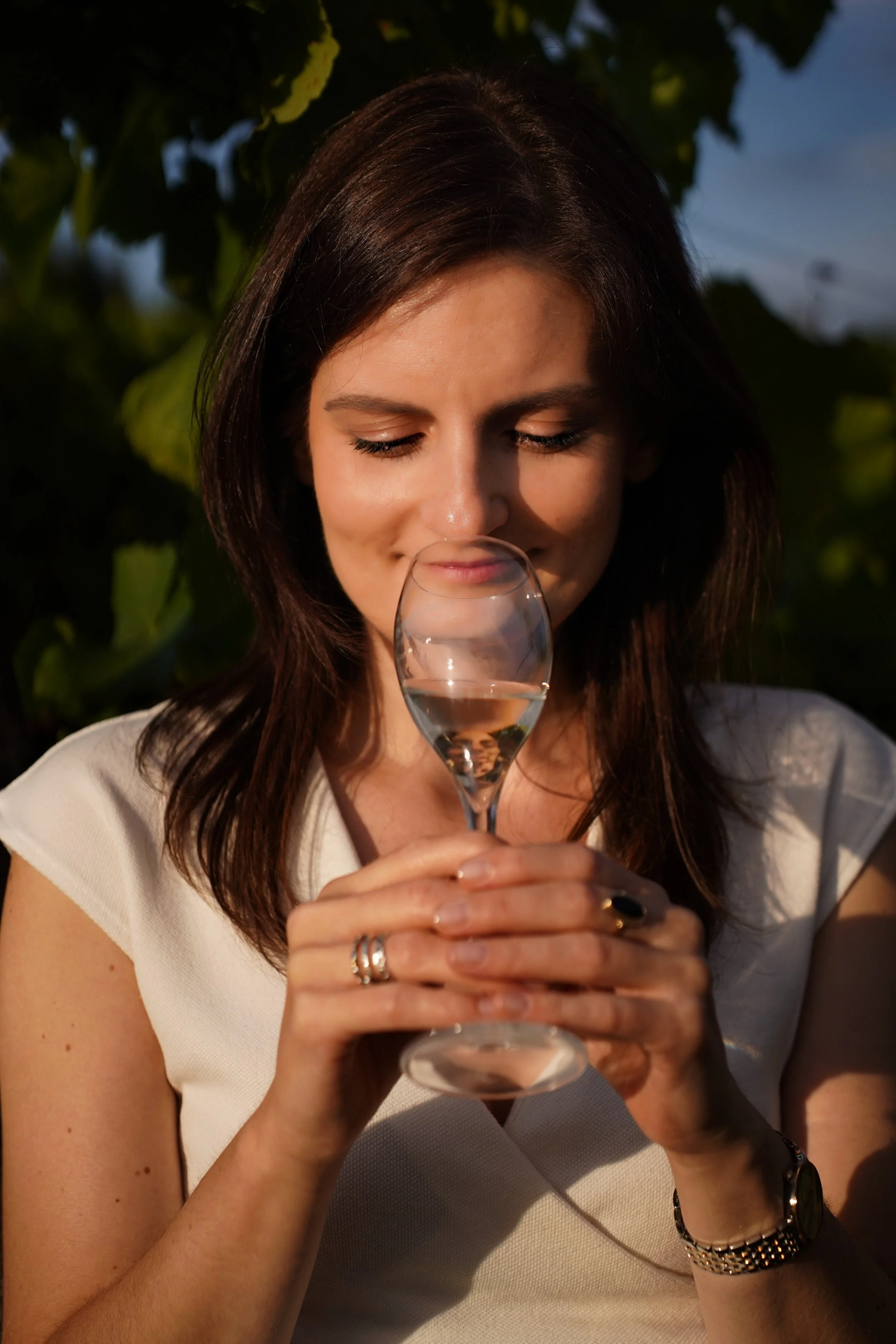
beata janton
"Our cool climate is not a limitation — it is our superpower. It gives our sparkling wines their freshness, precision, and character."
In the heart of central Poland, Dom Jantoń is redefining what cool-climate sparkling wine can be. Winemaker Beata Jantoń combines scientific precision with a deep respect for nature to craft elegant wines that capture the vibrant energy of Poland’s emerging wine landscape. With a background in biotechnology from Jagiellonian University and formal training in oenology at Université de Bordeaux, Beata brings international expertise back to her family’s vineyard in Wymysłów Francuski. Her philosophy blends French technical discipline, the innovative spirit of English sparkling wine, and the resilience required to farm vines in Poland’s cool climate. At Dom Jantoń, sparkling wines made with the traditional method are at the heart of the estate, with varieties such as Seyval Blanc playing a key role in expressing the freshness and mineral character of the local terroir. Through precision in the vineyard and patience in the cellar, Beata is helping to place Polish sparkling wines firmly on the international map.
Beata, What should we know about you and how did you end up in wine?
My story is one of returning to my roots, but with a global perspective. I graduated in Biotechnology from Jagiellonian University in Poland, but my heart was truly captured by the science of wine in France. I earned my degree in Oenology at the Université de Bordeaux and later specialized in Vineyard and Winery Management at Bordeaux Sciences Agro. To bridge the world of wine with the art of fine dining, I also completed a diploma at the prestigious Le Cordon Bleu in Paris and gained experience in a Michelin-starred restaurant. Dom Jantoń is the culmination of 30 years of family experience in the wine industry and hundreds of visits to vineyards across all continents. After living in big cities, I realized my place is here, in Wymysłów Francuski, surrounded by seven hectares of vines, animals, and the quiet rhythm of nature.
Can you share your path into winemaking in Poland and why you chose to work with Seyval Blanc?
My path was a deliberate transition from a “hobby” to a boutique, high-quality production where 80% of our portfolio consists of sparkling wines and ciders made using the traditional method (second fermentation in the bottle). Why Seyval Blanc? While we also grow Riesling, Chardonnay, and Pinot Noir, Seyval Blanc is remarkably resilient and expressive in our terroir. It allows us to maintain the “electric” freshness and vibrant acidity that have become the hallmark of Dom Jantoń. It is a grape that doesn’t try to be something else.
Poland is an emerging wine region with a cool climate. How do these conditions influence vineyard management, grape selection, and harvest timing?
Our vineyard is located in central Poland, where the soil is light, heat-retaining, and water-permeable—ideal for producing wines with exceptional finesse. In a cool climate, we manage the vineyard with surgical precision. We prioritize freshness and vibrancy. The challenge is always achieving the right balance of acidity; we don’t want to mask it but rather elevate it, ensuring our sparkling wines remain crisp and gastronomic.
Seyval Blanc is known for its adaptability in northern regions. How do you express the Polish terroir in your wines?
The name of our location, Wymysłów Francuski (“French Wymyslow”), dates back to the 18th century and is linked to the Marquis Stanislas Jean de Boufflers. There is a poetic symmetry in making wines here with a French education. We express the terroir through the purity of the fruit. As Jamie Goode recently noted, our wines are “fruit-driven and expressive,” capturing the precise mineral character of our light soils.
What challenges do you face with cold winters, shorter growing seasons, or other climate-related factors, and how do you overcome them?
Frost and shorter growing seasons are a reality, but my background in biotechnology and Bordeaux-trained vineyard management helps us navigate these risks. We focus on low yields and high quality. We also use the cool climate to our advantage—it preserves delicate aromatics that are often lost in warmer regions. When nature is challenging, we innovate in the cellar, for example through longer aging on the lees to build texture and brioche notes.
How has being a woman shaped your experience in the cellar and vineyard, if at all?
In a field historically dominated by men, my experience has shaped my approach. Winemaking, for me, is like haute cuisine—it requires impeccable timing, sensory intuition, and extreme attention to detail. In the cellar, I am always looking for elegance and harmony. Being a woman in this industry means bringing a certain finesse to the bottle while managing a complex agricultural business with firm resolve.
Can you describe a specific vintage that tested your skills or inspired you to innovate?
In Poland, every vintage is a unique trial—a high-stakes dialogue between the winemaker’s intent and the whims of the northern sky. Recently, my focus has been on perfecting our Brut Nature. Working with zero dosage (adding no sugar after disgorgement) is the ultimate test of a winemaker’s skill. In the world of premium sparkling wine, dosage is often used as a “make-up” to mask imperfections or balance harsh acidity. With Brut Nature, there is absolutely nowhere to hide. Every flaw, every imbalance, would be immediately exposed.
Who or what has been most influential in shaping your winemaking philosophy?
My approach to winemaking is a blend of three worlds: French precision, English innovation, and Polish resilience. My studies in Bordeaux taught me the technical discipline behind great winemaking. From the French, I learned that great wine begins with technical excellence and a deep respect for tradition. A turning point in my career was working at Nyetimber, the pioneer of English sparkling wine. That experience changed everything. It proved that cool climates—like ours in Poland—are not a weakness but a strength. At Nyetimber, I learned how to transform high acidity into world-class elegance. If France gave me the knowledge and England the vision, Poland taught me resilience. You must be patient and work with nature, even when the weather is difficult. Often, the most challenging seasons produce the most unique and exciting wines.
If you had to describe the essence of your wines in one phrase, what would it be?
At Dom Jantoń, we don’t just make wine—we capture the energy of the Polish climate through the lens of French precision. It’s about the beauty of a perfect bubble and the crisp, honest character of our soil. My journey—from the laboratories of Bordeaux to the cellars of England—is reflected in every bottle: a balance between rigorous craft and vibrant freshness.
What advice would you give to women pursuing winemaking in emerging cool-climate regions?
Invest in your education. Whether it’s a WSET course or formal oenology studies, knowledge is your strongest asset. Don’t be afraid to be a pioneer in emerging regions like Poland. Our unique climate is not a limitation—it is our competitive advantage on the global stage.
Looking ahead, what role do you hope to play in raising the profile of Polish wine internationally?
My goal is for Dom Jantoń to become a global ambassador for premium Polish sparkling wine. Participating in international events like the Cool Climate Wine Summit in Copenhagen or ProWein is just the beginning. I want international critics and wine lovers to recognize that Poland is not just an emerging region, but a producer of world-class wines that can stand proudly alongside the best in the world.
Susanna busi jacobsohn
“Each vintage tells its own story. My job as a winemaker is to listen, adapt, and let the vineyard speak—crafting wines that truly reflect the land, the season, and the care we put into every vine.”
HER STORY – Busi Jacobsohn Wine Estate
Susanna Busi Jacobsohn is a co-founder of Busi Jacobsohn Wine Estate, a boutique English sparkling wine producer in East Sussex. With Swedish, Italian, and Greek roots, Susanna’s early life was shaped by a deep appreciation for food, wine, and celebration. After careers in fashion and life coaching, she and her husband embraced a new chapter in 2014, planting their vineyard and exploring the art of sparkling wine in England’s emerging cool-climate regions. Susanna’s winemaking philosophy is rooted in respect for nature, precision in marginal climates, and crafting wines that reflect their terroir. Her story is one of adaptation, curiosity, and resilience—an inspiring journey of a woman shaping the UK’s sparkling wine scene with elegance, creativity, and a strong connection to the land.
By Senay Ozdemir
Susanna, can you tell us a bit about your background and how you got started in wine?
I am one of the co-founders and a key figure behind the Busi Jacobsohn Wine Estate, a boutique English sparkling wine producer based in East Sussex, England. I grew up loving wine and good food, influenced by my European background—I was born in Sweden with Italian and Greek roots. This cultural heritage gave me an early appreciation for wine as part of life and celebration, even before I worked in the wine world.
How did your life change before you started the vineyard?
Before starting the vineyard, I worked in fashion and later became a life coach while raising my children. After moving to England with my family and buying a country property (Blackdon Farm) in 2014, my husband and I didn’t initially plan to make wine. It emerged as a new chapter in our lives, something meaningful to explore after our earlier careers. I play a central role in organizational leadership and winemaking, as well as branding and design, complementing my husband’s viticulture activities.
How have your early life and the climates you’ve lived in influenced your winemaking?
Growing up in Sweden, the dramatic shifts between long summer days and dark winters heightened my awareness of nature’s rhythm. That sensitivity to light and timing translates directly into how I think about vineyards and life—when to act, when to wait, and how to preserve freshness and purity in the fruit. Living and working in the UK adds another layer. The British climate, much like Sweden’s, requires adaptability. You learn to work with variability rather than against it. Marginal climates teach precision—canopy management, picking decisions, and careful balance are essential. Culturally, there is also an appreciation for elegance, restraint, and wines that are food-friendly rather than overpowering. Together, these landscapes have shaped my winemaking philosophy around freshness, tension, and transparency. I am drawn to wines that reflect their terroir and environment—wines with a sense of place. Cooler climates encourage nuance, which I deeply value.
What are the key challenges of working with your grape varieties in the UK?
Our grapes—Chardonnay, Pinot Noir, and Pinot Meunier—are extremely sensitive to timing and environmental conditions, especially in cooler climates. Each vintage is unique, so we approach every season with flexibility. We constantly monitor the vineyard—tracking bud burst, flowering, and ripening—to anticipate the optimal harvest window. Winemaking in the UK is about living with the flow and embracing weather unpredictability. We invested early in a cold air drain to prepare for spring frosts. It’s all about respecting the natural rhythm and being ready to act quickly.
Can you describe the soils at Busi Jacobsohn and how they affect your wines?
The soils at Busi Jacobsohn are acidic clay loam over greensand, unlike the chalky, limestone-rich soils of the South Downs and Champagne. Our vineyard sits on undisturbed, non-depleted ground—before planting, the land was pasture and had not been farmed, which contributes to healthy vine growth and balanced fruit development. These conditions give our wines their distinct structure and character: subtle, balanced, and expressive, rather than strictly chalk-like. Our first harvest in 2017 was celebrated for its difference compared to other UK sparkling wines, described as more aromatic with a long finish.
What is it like being a woman in the UK wine industry?
Being a woman in the UK wine industry is a challenge—a good challenge, I think. It’s about learning from professionals around you and constantly striving to be your best. Sometimes it means having to prove yourself a little more. You notice details differently, approach problems creatively, and bring your own voice and vision. Excellence speaks for itself, and paired with confidence, resilience, and curiosity, you can make a mark that’s truly your own.
Can you share an example of a particularly challenging vintage?
One vintage that really challenged us was 2019. A cold spring and frosts threatened the young buds. It was a year that reminded me how much the land and weather dictate what a wine can become. Rather than trying to control the outcome, I focused on monitoring the weather and working with nature. It was also the wettest harvest we have had, yet the wines turned out beautifully. Experiences like this shape my philosophy: each vintage tells its own story, and we aim to craft wines that truly reflect the site, the season, and the care put into every vine. Challenging years teach patience and respect for the vineyard—they remind you that winemaking starts in the vineyard.
Who have been your mentors, and how have they influenced you?
Mentorship has been a mix of hands-on guidance and personal exploration. I learned a great deal from Simon Roberts, our winemaker from 2017 to 2022. His technical expertise and generosity in sharing knowledge shaped my approach.
For me, tasting is a personal journey—it’s about feeling the wine and connecting with it on a sensory level, not just technically. Beyond individual mentorship, being part of WineGB exposed me to people passionate about sparkling wine, broadening my perspective and challenging me to think creatively. Reading about the history of sparkling wine in the UK and Europe also deepened my understanding and helped me tell our story with nuance and heart. The combination of observing, tasting, and reading continues to shape how I make and communicate our wines.
How do you see sparkling wine and its role beyond celebration?
For me, sparkling wine is first and foremost just a wine—with bubbles! Its role goes beyond celebration; it is very much terroir-driven. England’s diversity of soils and climates gives sparkling wines their unique character, combined with the cultural background each of us brings. I believe sparkling wine pairs beautifully with food—not just fish and shellfish, but cheese, duck, meat, and more. Sharing sparkling wine with a meal is as special as celebrating with it.
What advice do you have for women in the wine industry?
Be proud of who you are. Remember your connection to nature and Mother Earth—women have a unique nurturing role. Trust yourself, care deeply, and support other women. Stay humble, and share what you have—because when you give generously, rewards come naturally.
What do you see as the future for women in the UK cool-climate wine industry?
I believe the future is bright. This industry is closely connected to nature, mind, and body—areas where women naturally excel: nurturing, observing, and caring for the land and craft. I hope more women will not only participate but also be seen and heard. Their perspectives, intuition, and creativity can become a recognized strength in shaping the industry. The UK cool-climate wine scene is still young, full of possibilities, and women have an incredible role to play in leading it forward.
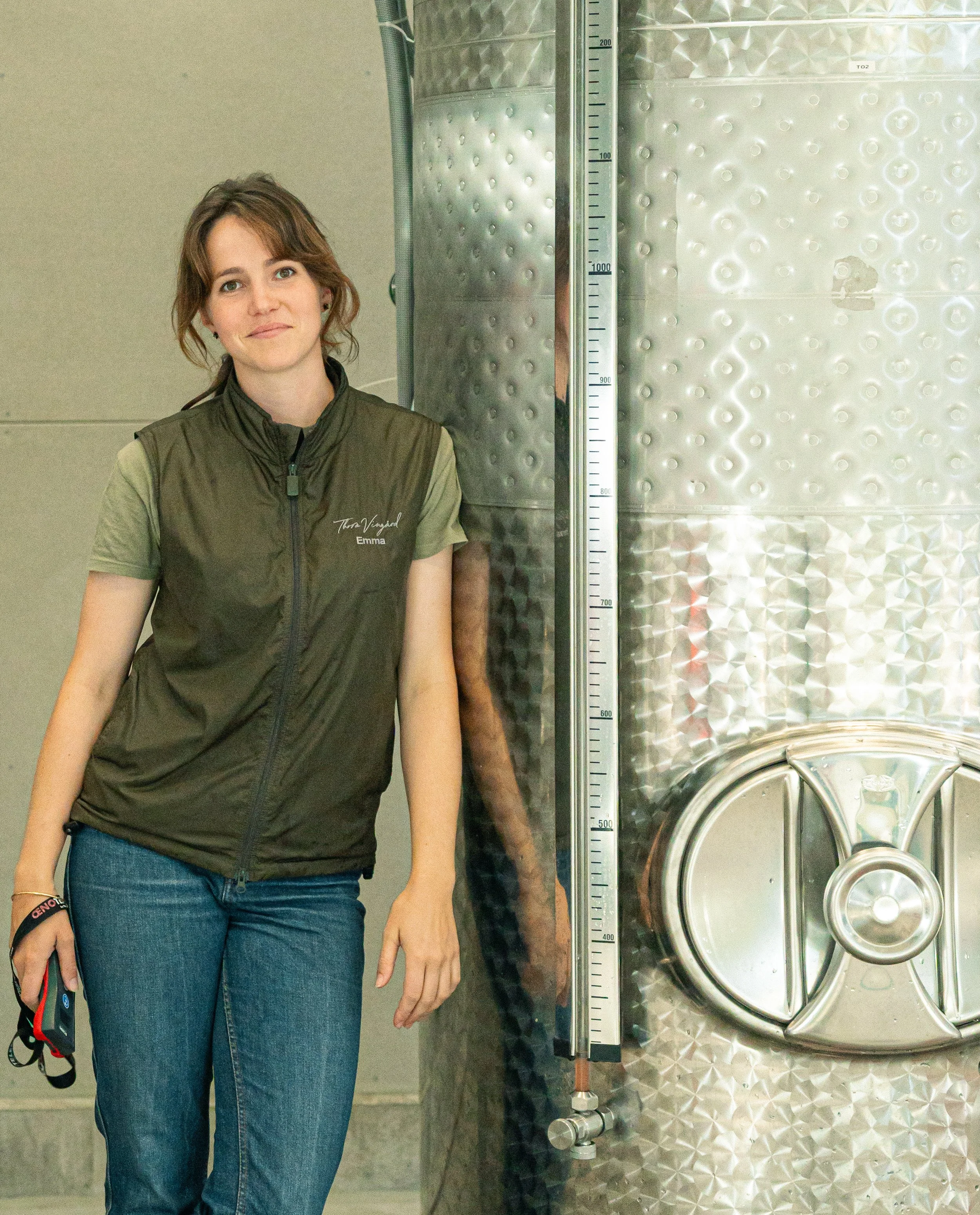
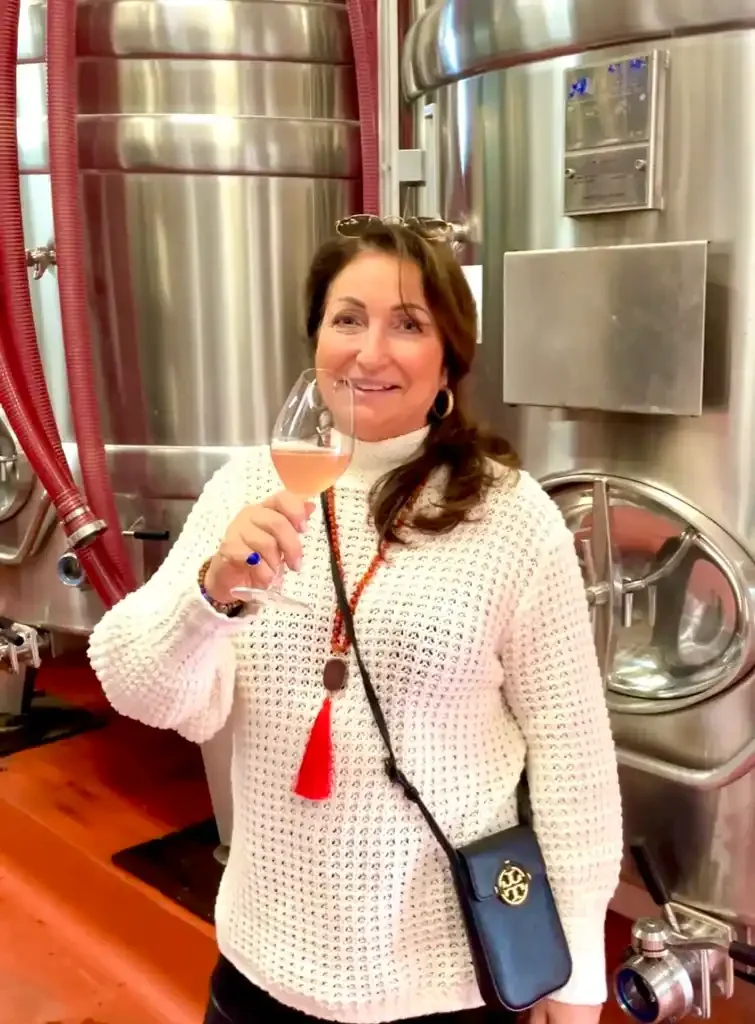
emma berto, oenologist winemaker
“Working in Sweden changed my palate completely. I developed a deep appreciation for vibrant acidity and tension in wine.”
Emma Berto: Discovering the Potential of Swedish Terroir
Raised in a French wine region but now working in Sweden, Emma Berto represents a new generation of winemakers exploring the possibilities of northern viticulture. At a time when Sweden’s wine industry is still taking shape, she is helping to understand and express the character of the Solaris grape—one of the key varieties thriving in Scandinavia’s cool climate. Working closely with nature and practicing organic viticulture, Emma approaches winemaking with patience, technical precision, and a deep respect for the rhythm of the vineyard. Her wines reflect both the intensity of Nordic light and the freshness that cool climates naturally bring. In this conversation, she shares how moving from France to Sweden reshaped her palate, the challenges and surprises of working with Solaris, and why emerging wine regions demand both humility and independence.
By Senay Ozdemir
Emma, Can you tell us about your journey into winemaking and what drew you to Solaris grapes in Sweden?
I grew up in a wine region in France, although at first I had no direct connection to viticulture. What attracted me to winemaking was the idea of working closely with nature and transforming a raw agricultural product into something living and expressive. Once you step into this world, it becomes very difficult to step away—there is always more to learn and more to understand about the vine, the wine, and the complexity surrounding this field. Before arriving in Sweden, I had never heard of Solaris. The variety was already planted at the estate when we arrived, so we had to discover it and learn how to work with it. Today, after almost five years at the domaine, I am still impressed by its resilience. Even though it was bred to withstand cold temperatures and the intense climate of our region, it continues to adapt from year to year despite the challenges. That adaptability is something I deeply respect.
Growing up in France and now living in Sweden, how has the climate shaped your approach to the vineyard and the wines you produce?
Producing wine at such different latitudes as southern France and southern Sweden inevitably changes your perception of viticulture—and especially your perception of taste, particularly acidity. In the south of France, wines are becoming increasingly alcoholic and often lack acidity due to the vine’s physiology in hot, dry climates. When I arrived in Sweden and began producing wines with naturally higher, sharper acidity, it completely changed both my approach to winemaking and my palate. Today I have developed a deep appreciation for vibrant acidity and tension in wine. It has reshaped how I taste and evaluate wines, and I sometimes find it challenging to enjoy wines from the region where I grew up.
Solaris is a grape that thrives in northern climates. How do you work with its strengths and challenges to express the terroir?
Solaris is a hybrid grape, part of the PIWI family, bred for disease resistance and adapted to the cold Scandinavian climate. It is an extremely versatile variety—it allows us to produce sparkling wines, still white wines, orange wines, and even botrytised wines. This versatility offers significant creative freedom in the cellar. In the vineyard, however, it can be demanding. It is very vigorous and requires substantial canopy management, as its growth can be explosive. Despite its large leaves and northern location, it can easily reach 14–15% alcohol if left hanging until mid-October, which can be quite surprising. Although Solaris is classified as disease-resistant, we have learned that it still requires careful attention in plant protection to maintain yields and balance. To express the terroir, we focus on managing vigor, controlling ripeness carefully, and harvesting at the precise moment when acidity, sugar, and aromatic profile align with our vision.
What is a typical year like in your vineyard—from pruning to harvest—and how do northern light, frost, or cold affect your decisions?
It is becoming increasingly difficult to speak of a “typical” year in the vineyard due to climate change. Still, the season tends to follow a broad rhythm. Pruning usually takes place between December and late March. As temperatures begin to rise, sap flow—often referred to as “bleeding”—starts in April. Budbreak generally occurs in early May, although in the past two years it has already begun in late April. Flowering follows between mid-June and mid-July, depending largely on spring temperatures. By mid-August, veraison becomes visible, particularly in the red varieties, as the grapes begin to change colour and ripen. Harvest for Solaris usually begins around mid-September, while other varieties are picked between late September and mid-October, depending entirely on the conditions of the year. Northern light plays a crucial role throughout the growing season: the long summer days support steady ripening, while the constant risk of early autumn frost means we must remain highly attentive and ready to react.
How has being a woman influenced your approach to working in the vineyard and the cellar, if at all?
I try not to define my work through gender, but I am aware that the wine world—especially in technical and vineyard roles—has historically been male-dominated. If anything, being a woman has reinforced my need to be technically rigorous, highly attentive to detail, and confident in my decisions. I’ve noticed that I naturally focus on the finer details of each vine and every stage of production, while my partner tends to look at the bigger picture. I see this difference as a strength, creating a balance in how we approach the vineyard and the cellar.
Can you share a moment when nature surprised or challenged you in a way that shaped your winemaking philosophy?
One year, after a very promising season, we faced an unexpected cold and stormy period close to harvest. It forced us to pick earlier than planned.Instead of resisting the situation, we embraced it—and the wine turned out to have remarkable freshness and elegance. That experience reinforced something essential: patience. In winemaking, we often want things to move quickly. But one of the most beautiful lessons nature has taught me is that truly great things take time. You cannot rush the vine, and you cannot rush a wine. Respecting that rhythm has deeply shaped my philosophy.
Who or what has most influenced your development as a winemaker in such a unique, emerging region?
My French background provided strong technical foundations. However, working in Scandinavia shaped my independence. In an emerging wine region, there are fewer established answers. You must observe carefully, experiment, stay alert, and trust your instincts. Organic viticulture has also profoundly influenced me. Working without synthetic pesticides forces you to understand and support the ecosystem rather than control it. You must give in order to receive, and that mindset has transformed how I see both the vineyard and my role within it.
If you could describe your wines in one sentence that captures both the landscape and your personal touch, what would it be?
Our wines are born from a landscape of striking beauty and singular climate—shaped by long summer daylight and sea winds, and crafted with conviction and character by people who deeply believe in this terroir.
What advice would you give to women exploring winemaking in northern or cool-climate regions—or entering the wine industry in general?
The best way to understand emerging or cool-climate regions is to speak with the people who actually grow and make wine there. Learn from their challenges and mistakes—that experience is invaluable. Avoid simply copying established models. Without fully understanding the local climate and growing conditions, those approaches may not work. And after that, trust your technical knowledge and your intuition.
Looking ahead, how do you see Sweden’s wine scene evolving, and what role do you hope to play in it?
I see enormous potential for Swedish viticulture over the next twenty years. There is still much to build: strengthening professional structures, raising quality standards, developing expertise, and allowing more flexibility in regulations—particularly regarding direct sales—will be key steps forward. The momentum is there, but it takes time. Everyone involved in this dynamic contributes in their own way to moving things ahead. As part of the pioneering generation, I feel committed to sharing our experiences, exchanging knowledge, and supporting others who wish to begin this journey. Climate change will challenge every wine region in the world—including Sweden. Our responsibility is to anticipate, adapt, and continue learning.